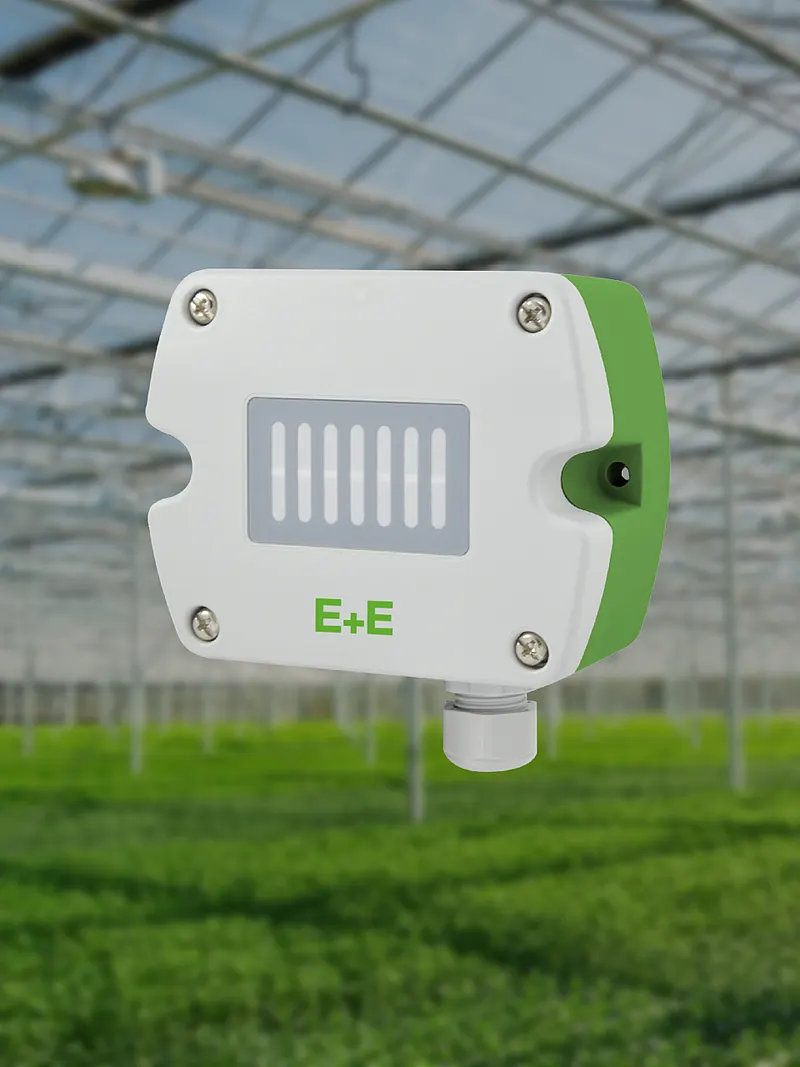
At E+E Elektronik, long-term stability is not a marketing promise. It is the result of a consistently high standard across the entire development and manufacturing process since 1979. Ongoing product testing, R&D and smart sensor protection concepts reliably prevent sensor drift.
E+E sensors measure accurately for years. Across all applications.
A sensor that slowly deviates from its setpoint continues to report a value. The system responds to it. Processes appear to run normally. The consequences often appear unexpectedly, long after the measurement has already become inaccurate.
In building automation, even minor measurement deviations lead to incorrect system control, unnecessary energy consumption, and reduced comfort.
In industrial processes, a drifting sensor actively steers the process in the wrong direction. Inconsistent results and quality deviations follow.
Where regulatory requirements apply, sensor drift is more than an operational inconvenience. It is a documented deviation that requires investigation and corrective action.
Sensor stability is a fundamental quality requirement in every application. It is especially relevant wherever sensors serve as a critical control variable. E+E Elektronik ensures long-term stability through targeted engineering decisions made before production begins.
The Foundation of Long-Term Stability: How E+E Elektronik Prevents Sensor Drift
In-House Sensor Element Production
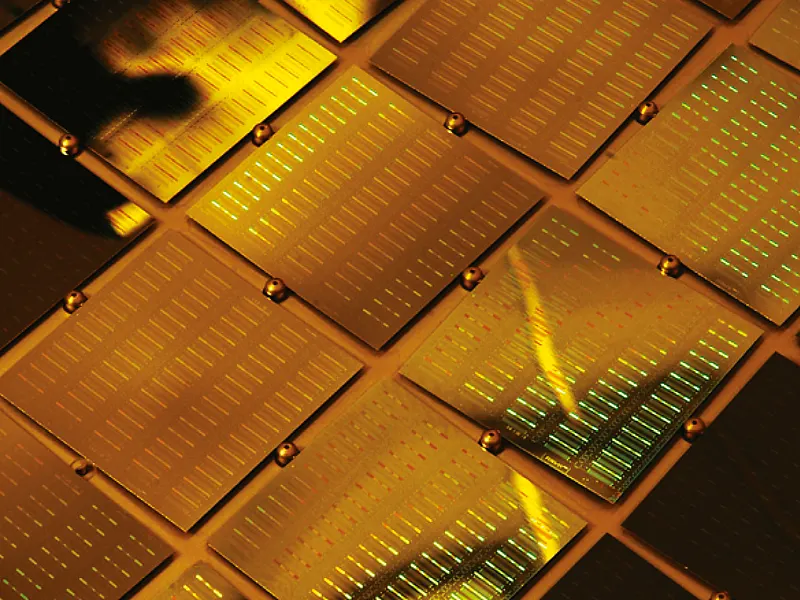
E+E Elektronik selects the raw materials itself and manufactures the sensor elements from the lowest production level to the finished sensor entirely in-house. The real know-how lies in the sensor element itself, not in assembling purchased components.
E+E Elektronik has been developing and manufacturing sensor elements since 1990, building on thin-film expertise that dates back to the company's founding in 1979.
Cleanroom Manufacturing
A fundamental prerequisite for the long-term stability of the sensors is a state-of-the-art manufacturing process. Contamination during production, even a single dust particle, can later manifest as measurement errors and promote sensor drift.
At E+E Elektronik, every sensor element is produced in a precisely controlled cleanroom environment. Temperature, humidity, particle concentration, airflow, electrostatic discharge, and material purity are continuously monitored and managed throughout the process.
Thin-Film Technology
E+E Elektronik uses thin-film technology for the production of sensor elements. In this process, functional layers are deposited onto a substrate. The core of this technology lies in the fine-tuning of process parameters: layer thickness, geometry, and etching and milling processes. The precise combination of these parameters significantly influences sensor performance and stability, and is based on decades of internal research and development.
Application Knowledge as a Stability Factor
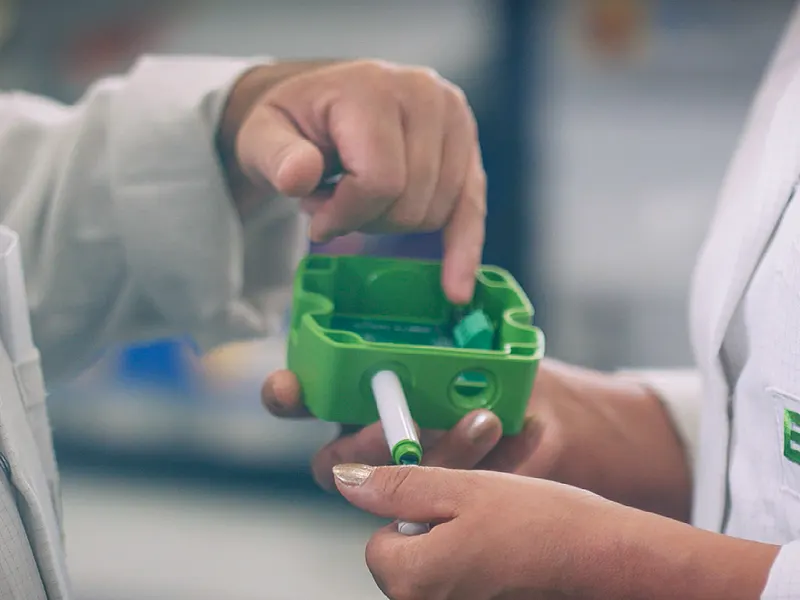
A consistently high manufacturing standard includes deep application knowledge. At E+E Elektronik, sensor elements, measurement principles, and housing design are precisely tailored to the respective application.
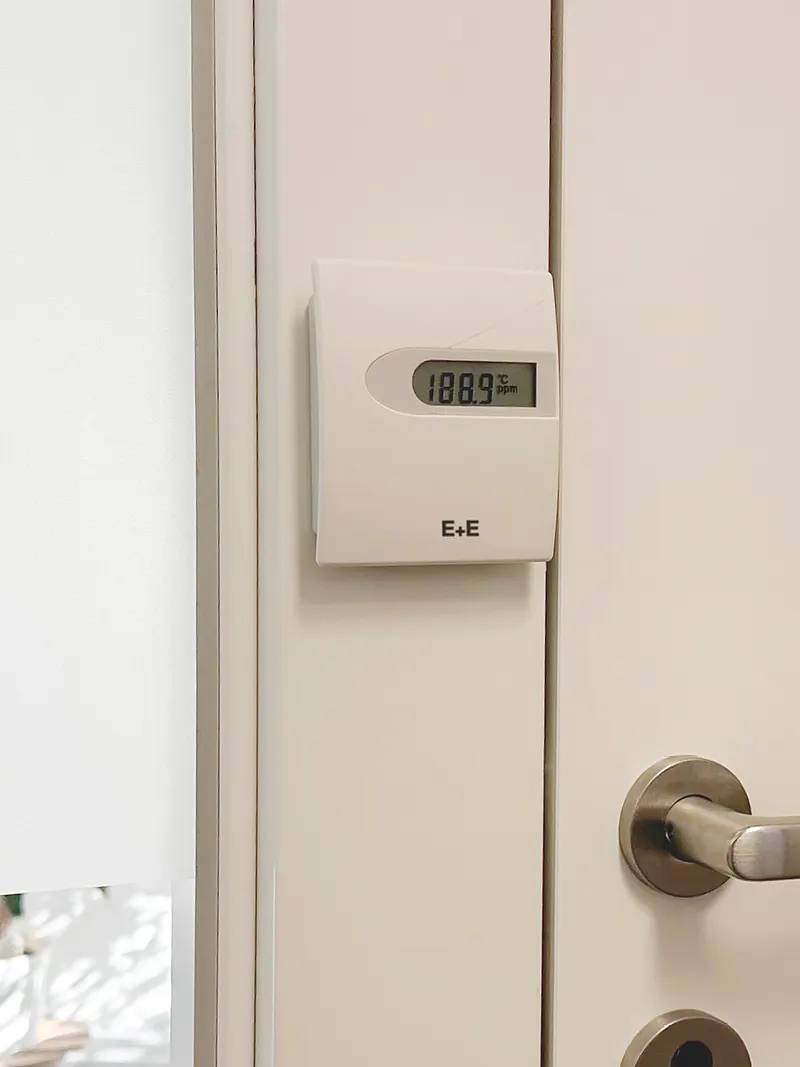
For room sensors, an open back panel improves airflow. Material selection, geometry, and installation format are deliberately aligned with the specific operating conditions.
Industrial applications require additional protection concepts against mechanical and chemical stress, as well as annual calibration.
This is how sensor drift is minimised over the long term: not by over-engineering a generic product, but by supplying exactly the right sensor for the job.
Fabian Kass, Product Manager at E+E Elektronik
Long-term stability is not the result of a single measure. It is the outcome of a consistently high standard across the entire development and manufacturing process.
Precision you can count on
Our experts will show you how E+E Elektronic minimises sensor drift in your application over the long term.
The Long-Term Test: E+E Room Sensors Measure Accurately for Years
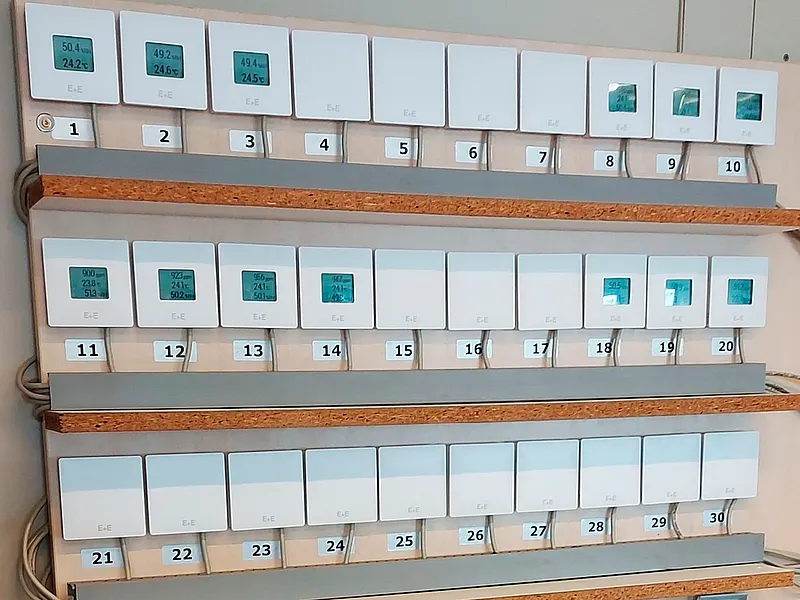
E+E Elektronik has been conducting an internal field test at its own office building in Engerwitzdorf since October 2023. Multiple variants of room sensors from the CDS, HTS, and TES product lines are installed and operating under real office conditions: seasonal temperature fluctuations, intermittent window ventilation, and ceiling cooling.
The results match expectations exactly. After more than two years of continuous operation, all sensors remain within specification across all three measured parameters (humidity, temperature and CO₂).
This stable long-term behaviour proves: sensor drift can be reliably minimised through consistently high manufacturing and material standards.
Long-Term Stability: Advantages for HVAC Applications
In building automation, the sensor value determines how a ventilation system responds and how a cooling unit operates. A deviation of just +2 % RH leads to unnecessary ventilation runtimes. Heating and cooling compensate for conditions that do not exist. This has a noticeable impact not only on energy costs, but also on comfort.
In museums, hospitals, and cleanrooms, sensor drift actively affects controlled environmental conditions and the functions they support.
Conventional sensors frequently generate follow-up costs through replacement, recalibration, and incorrect control. Our room sensors are designed to remain stable without scheduled calibration intervals. E+E sensors perform as specified: at installation and years later.
For CO₂ measurement, E+E Elektronik uses NDIR technology across the entire HVAC range, including standard room sensors. NDIR delivers more stable readings over time than alternative measurement principles used by other manufacturers in this segment, reliably preventing sensor drift throughout the entire service life.
Beyond the product, you benefit from E+E Elektronik's strong sales and service network. When a project requires fast answers or application-specific guidance, you get direct access to technical expertise.
FAQs on Sensor Drift
What is sensor drift?
It is a gradual deviation of a sensor reading from the actual measured value over time. The sensor continues to deliver a signal, but not one that corresponds to the real measured quantity. The causes often lie in aging effects of the sensing element, material fatigue, or inadequate manufacturing processes.
How can I detect sensor drift?
Sensor drift is rarely directly perceptible. Regular calibration, comparing the measured value against a more accurate reference value, is the most reliable method of detection. E+E Elektronik operates an accredited calibration laboratory in accordance with ISO 17025 (identification number 0608) with reference values recognised throughout Austria.
Does long-term stability also apply to industrial sensors?
The manufacturing foundation, in-house sensor element production, cleanroom manufacturing, and thin-film technology, applies to all E+E sensors. Industrial applications require additional protection concepts against mechanical and chemical stress, as well as annual calibration. E+E Elektronik addresses these requirements through special protective coatings and application-specific sensor concepts.
Looking to Reliably Minimise Sensor Drift in Your Application?
Speak with our experts. We provide a sensor solution tailored to your specific requirements that minimises sensor drift and measures accurately over the long term.
For security and compliance reasons, we use a double opt-in process and rely on a third-party service to handle your request. Please confirm your consent by clicking the button above. Learn more in our
privacy policy
.
This website uses cookies
We use cookies and tracking technologies (including those from third parties) to optimise our website and integrate features such as Google Maps and YouTube.
Your data may be transferred to the USA, where a lower level of data protection compared to the EU applies. Therefore, data transfer will only occur with your explicit consent.
Please choose in the cookie settings which cookies you wish to allow. Non-essential cookies will only be set with your consent. Without your consent, some features of the website may be restricted.
You can withdraw your consent at any time in the cookie settings. For more information, please refer to our Privacy Policy.
Your data protection settings
Enable and disable individual cookies. Required cookies cannot be disabled.
This is a Microsoft cookie that contains a GUID assigned to your browser. It gets set when you interact with a Microsoft property, including a UET beacon call or a visit to a Microsoft property through the browser.
Expires after
12 months
Cookie Name
_uetsid
Purpose
This contains the session ID for a unique session on the site. Note: As of as of July 2023, _uetsid has been updated with additional parameters as follows: insights_sessionId, timestamp, pagenumber, upgrade, upload.
Expires after
30 minutes
Cookie Name
_uetvid
Purpose
UET assigns this unique, pseudoanonymized visitor ID, representing a unique visitor. UET stores this data in a first-party cookie. Note: As of as of July 2023, _uetvid has been updated with additional parameters as follows: insights_userId, cookieVersion, expiryTime, consent, cookie_creation_time.
Expires after
12 months
Cookie Name
_RwBf
Purpose
This cookie helps to track the effectiveness of advertising campaigns on the Bing advertising network.
Expires after
6 months
Cookie Name
_uetmsclkid
Purpose
This is the Microsoft Click ID, which is used to improve the accuracy of conversion tracking.
Expires after
6 months
Cookie Name
MSPTC
Purpose
UET assigns this unique, pseudoanonymized visitor ID, representing a unique visitor. It's a partition cookie. This cookie is used in the browsers' Privacy API.
Expires after
6 months
Cookie Name
MR
Purpose
This is a Microsoft cookie that contains a binary flag. It gets set when you interact with a Microsoft property, including a UET beacon call or a visit to a Microsoft property through the browser.
The CallTrackingMetrics tracking code will remember the original source the visitor came from and will continue to show them the tracking number associated to that source.